
The largest intergenerational transfer of private wealth in history is already underway. More than US$100 trillion is expected to move between generations over the coming decades. At the same time, governments across the world face fiscal constraints, political cycles and institutional systems struggling to respond to increasingly complex societal challenges.
That imbalance is beginning to reshape the role of philanthropy itself.
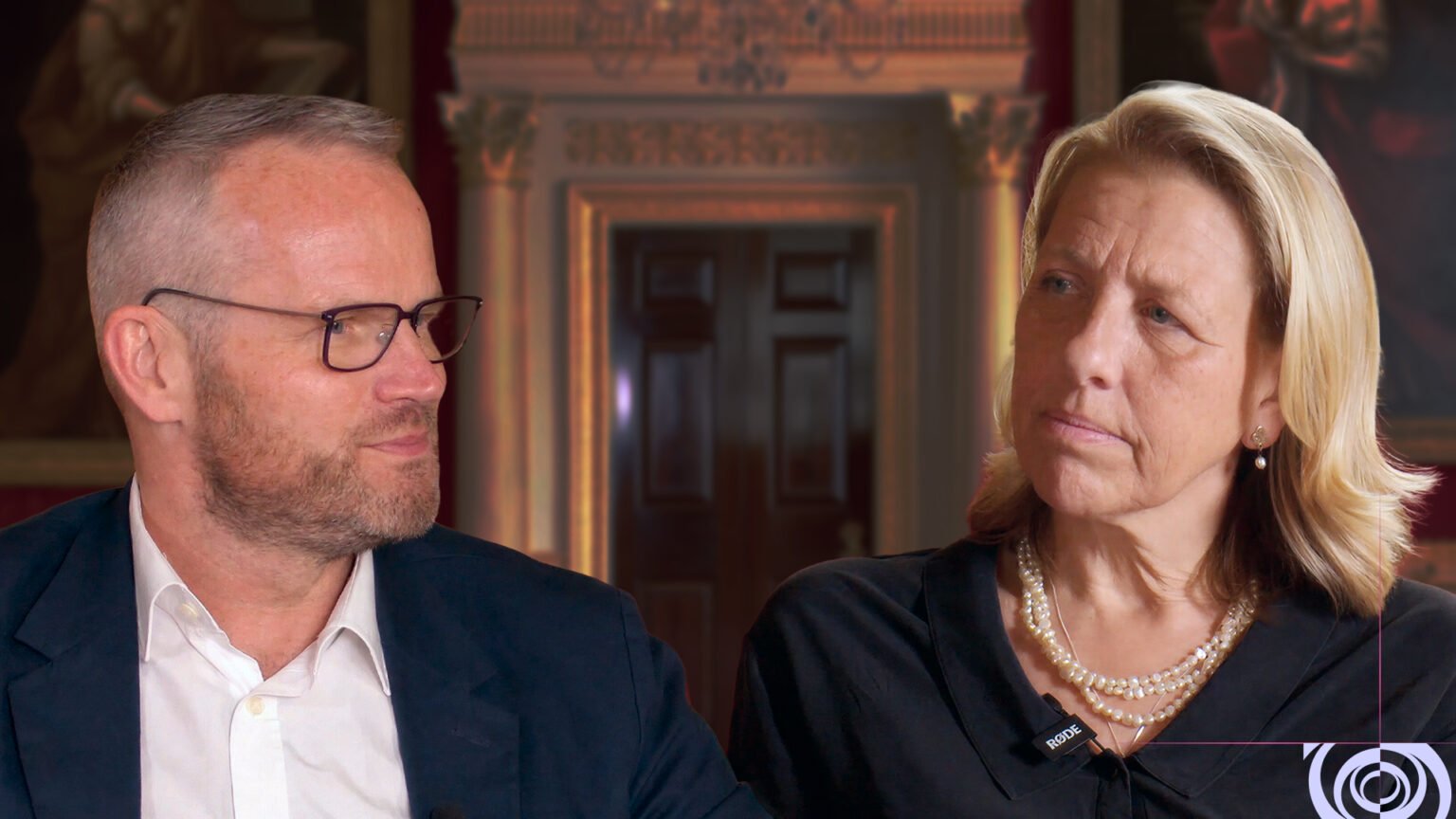
In a Wealth Office episode produced in collaboration with Charles Park Family Office, host Michael Macfarlane spoke with Kedge Martin, former adviser to Prince William and Prince Harry on philanthropic strategy within St James’s Palace, and Jamie Webb, Managing Director of the Global Philanthropists Circle, about how private capital is evolving beyond traditional charitable models toward something more strategic, entrepreneurial and globally influential.
Full Discussion
Why Entrepreneurial Wealth Is Reshaping Philanthropy
The traditional model of philanthropy, the endowed foundation, the named building, the annual cheque, has evolved. What is replacing it looks far more like venture capital for social change: patient, thesis-driven, willing to absorb early failure, and focused on structural outcomes rather than visible outputs.
Many of the world’s most persistent social problems are not short of awareness. They are constrained by slow systems, fragmented responsibility and institutions that are often unable to take risk. Government, markets and established organisations each play essential roles, but they are not always designed to test unproven solutions or sustain long-term experimentation.
Entrepreneurial wealth can behave differently. Founders and wealth creators are often used to allocating capital under uncertainty. They understand that not every investment succeeds. They are more comfortable with iteration, failure and asymmetric outcomes. For principals willing to take a contrarian approach, underserved issues represent not only moral opportunity but strategic leverage: the ability to move the needle where marginal capital can have disproportionate effect.
This does not remove the need for humility. In fact, it makes it more important. The failure of many philanthropic interventions is not a lack of generosity, but distance from the problem. Capital deployed without listening can distort the very systems it intends to improve.
The most effective philanthropy combines entrepreneurial risk with proximity to those who understand the issue on the ground.
The Rise of Influence as Capital
In modern philanthropy, influence can be as powerful as funding.
Royal patronage has long demonstrated this principle. A cause associated with the right figure can gain credibility, visibility and momentum far beyond the value of any individual donation. The Prince’s Trust and The Earthshot Prize show how public attention, institutional credibility and convening power can turn philanthropic activity into a broader movement.
The same principle applies beyond royal structures.
Private wealth holders often possess networks that span business, policy, media, education and culture. When those networks are mobilised around a cause, philanthropy moves beyond grant-making into coalition building. It becomes a mechanism for attracting attention, coordinating actors and accelerating institutional response.
This is one reason philanthropy is no longer simply a question of how much capital is given. The more important question is often what else the principal can mobilise.
Money funds activity. Influence can create momentum.
From Transactional to Regenerative Thinking
For many entrepreneurs, the early stages of wealth creation provide direction, energy and measurable progress. The objective is clear: build, grow, compete, repeat. Later, that structure can weaken. Once financial success has been achieved, the question often becomes less about what can still be accumulated and more about what that accumulation was ultimately for. Philanthropy often begins at that point.
This is why reputation and purpose are difficult to separate. Some philanthropy is undoubtedly reputational. Public giving can improve standing, soften criticism and associate wealth with social value. That tension is real and cannot be ignored.
Many principals arrive at philanthropy through a more personal transition: a desire to give meaning to capital, involve the next generation, respond to a formative experience or create something that extends beyond commercial success. The emotional dimension is not incidental. In many cases, it is what sustains long-term commitment.
Legacy is not created through visibility alone. It is created when capital, conviction and continuity align.
That shift also changes how philanthropy itself is approached.
Transactional philanthropy allocates capital toward a defined issue and measures success through direct intervention. Regenerative thinking operates differently. Rather than focusing solely on immediate outcomes, it examines the systems, institutional weaknesses and long-term conditions that continue producing those outcomes in the first place.
One model responds to pressure. The other attempts to strengthen the surrounding structure.
For family offices and long-term capital holders, philanthropy is increasingly moving beyond charitable activity alone. It is becoming part of how wealth participates in shaping long-term societal infrastructure.
Asia and the New Geography of Global Philanthropy
A growing share of future private capital will be created or transferred in Asia. That shift brings different assumptions about family, business, government and social responsibility. Western philanthropy has often developed through a strong civil society, sometimes independent from the state and sometimes openly adversarial toward it.
In much of Asia, philanthropy more often operates through partnership, alignment and proximity to government priorities. It shapes how causes are selected, how legitimacy is built and how social impact is delivered. Education, ageing, healthcare and social mobility are already emerging as major areas of focus across Asian philanthropic activity, often reflecting the developmental priorities of the societies in which that wealth was created.
The next generation adds another layer of change.
Many younger wealth holders are globally educated, internationally connected and less interested in philanthropy as passive legacy preservation. They are more likely to ask how capital can create measurable impact, how family values should evolve and how wealth can participate in solving problems beyond the local community: less deferential to legacy structures, more focused on measurable outcomes and increasingly unwilling to separate how capital is invested from the values it is meant to reflect.
For family offices, philanthropy is therefore becoming part of a broader strategic architecture. It sits alongside governance, succession, reputation and long-term capital deployment. It is not separate from the future of the family enterprise. It is increasingly one of the ways that future is defined.
The full Wealth Office conversation examines these issues in greater depth, including royal patronage, entrepreneurial philanthropy, trust-based giving, next-generation wealth and the changing role of private capital in addressing social challenges.
In a world where private capital is more concentrated, mobile and influential than ever before, philanthropy is no longer peripheral to wealth. It is becoming one of the ways wealth enters society.
With thanks to our collaborator Wealth Office (财富办公室) for hosting this discussion.
Special thanks to Michael Macfarlane Associates